Sandboxed Branch Environments for Agent Experimentation Against Production Data
Isolated database branches let agents experiment safely against real production data.
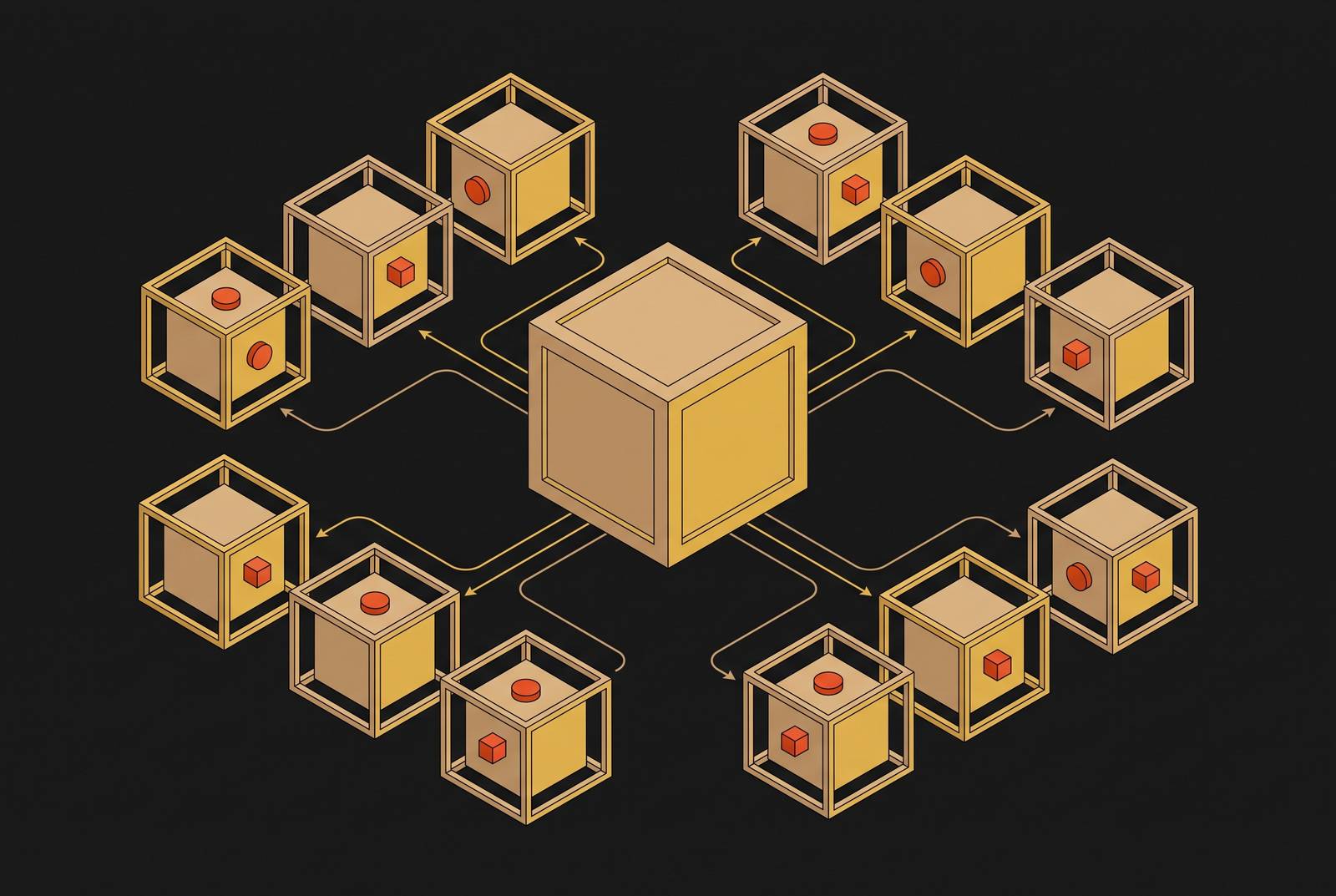
Managed database infrastructure for AI agent workloads needs something most platforms still do not offer: each agent gets its own isolated compute and data branch, with full query logging, so no single agent can corrupt production state or crowd out another agent's queries. Get that right and autonomous agents can experiment against real data without threatening it. This piece explains how database branching supplies the missing primitive, what it takes to make branching fast at analytics scale, and what a team must put in place before handing agents the keys.
The gap agents expose: code and infrastructure have isolation primitives, databases still don't
Code has had an isolation primitive for decades. Git lets a developer branch a repository, experiment freely, and merge or discard the result without touching the main line. Infrastructure followed the same path. Terraform gives teams declarative configuration they can review, version, and roll back before anything reaches production. The database, remarkably, has no equivalent. Most teams still reach for a shared staging environment, a nightly dump restore, or a carefully guarded production credential.
Human analysts work inside that gap without much trouble. They open a query editor, run a read, inspect the results. An agent behaves differently. It runs iterative, multi-step, write-capable workflows on its own, retrying queries and reformulating them when accuracy falls short. Each retry amplifies load on whatever environment it touches. BranchBench frames the shift plainly: branchable databases are evolving from developer tools into infrastructure for agentic workloads. Give a write-capable autonomous agent access to a system with no branching primitive, and the absence stops being a convenience. It becomes a structural risk.
What database branching is and how it works at the storage layer
Database branching is a storage-layer primitive. It is not a backup and not a clone in the traditional sense. A branch creates an isolated environment instantly by sharing pointers to existing data rather than copying it. The mechanism is copy-on-write. A new branch inherits schema and data through pointers to the same underlying storage, and new storage is allocated only when data actually changes. That has two consequences. Branches appear immediately regardless of database size, and cost scales with what changes rather than with total data volume.
Think of it the way Git commits point to blobs instead of duplicating files. A branch is a label over existing storage, not a materialized copy. The lakeFS guide describes zero-copy branching as the data isolation layer of an agentic sandbox, distinct from compute isolation, which containers and virtual machines handle. That distinction matters because the alternatives teams have relied on all fail differently. Shared staging databases give every concurrent agent and developer one environment with no isolation. pg_dump restores are slow and heavyweight, and while PostgreSQL 18 can delegate database copy to filesystem cloning, it still requires no active sessions on the source. The roughly 200ms clone window makes that a minimal interruption, not a usable branching primitive. Static snapshots are read-only and point-in-time, useful for reproducibility but useless for experimentation. Full cluster clones offer real isolation but are expensive and slow to provision at analytics scale.
BranchBench identifies five representative agentic workflows: agentic software engineering, failure reproduction, data curation, MCTS, and simulation. In each case the branch is disposable. An agent can mutate it freely, then discard it, and the parent data never changes.
Why fast branching at analytics scale is harder than it looks for OLAP engines
Copy-on-write branching came from transactional databases. Extending it to OLAP engines at analytics scale introduces latency, cost, and freshness problems that a naive implementation simply does not solve. BranchBench exists because existing primitives do not fully align with what agentic workloads demand.
The tension is architectural. OLAP engines are built for high-throughput scans over large, append-heavy datasets. Branching must not serialize writes or block ingestion on the parent. But the obvious way to keep a branch isolated, by routing every query through object storage like S3, imposes a latency penalty on every scan. That is the same S3-routing problem that undermines real-time analytics generally. The alternative, a static snapshot, avoids the S3 penalty but gives the agent stale data, defeating the point of experimenting against real data. Teams without a proper branching primitive are forced to pick among stale snapshots, expensive full clones, or read-only sandboxes, and none of them supports active agent experimentation.
Freshness is its own problem. An agent branch that diverges from a fast-moving production dataset turns stale within minutes. Either the branch is cheap enough to recreate frequently, or the isolation guarantee quietly degrades into a stale-data problem. Concurrency compounds the issue. Agent fleets do not probe data one at a time. They work in parallel, each needing its own isolated branch, and provisioning cost must not scale linearly with agent count. lakeFS puts it directly: when multiple autonomous agents work together, the volume and speed of data processes can skyrocket, and sandboxing must reduce the blast radius of any single faulty workflow.
What a branch environment must actually provide to make agent experimentation safe
A branch environment that is safe for agent experimentation rests on four properties working together: data isolation, compute isolation, full auditability, and merge-or-discard control. No single layer is sufficient alone. Data isolation means the branch is genuinely isolated, not a read-only view and not a shared staging table. An agent needs room to write, mutate, and experiment with no path back to production state. Compute isolation is a separate concern. Agent branches should run on isolated, read-only compute over shared data, so one agent's query load cannot compete with production query throughput. It also contains runaway queries. Agents retry when accuracy falters, and an isolated compute lane caps the scan volume any single agent can impose. lakeFS treats containers as the standard for short-lived agent tasks and reserves VMs for higher-risk execution. The choice depends on the threat model. Fly.io's agent sandbox guide makes the distinction sharply: isolation and permission are separate questions. The first decides where the agent runs, the second what it can reach once it is there, and most setups only answer the first.
Auditability means every query an agent runs inside a branch is logged in full. Autonomous does not mean unaccountable. Jentic's agentic sandbox guide describes the principle: every agent action is observed, every call is logged, every action traceable, every success or failure able to harden the next step. Those logs also feed the merge decision. A team reviewing whether to promote a branch's changes to production needs a complete record of what the agent did and why. Merge-or-discard control completes the framework. A branch environment with no merge pathway is a throwaway sandbox. The value comes when validated agent work can be promoted through an explicit, reviewable gate. Jentic frames this as a workflow graduation model: only validated workflows move from simulation to production, with human-in-the-loop validation ensuring only proven patterns make it. Automated checks for schema integrity, constraint validation, and completeness against business standards can run on the branch first. Discard is just as important. An ephemeral branch that is destroyed leaves no production footprint, and that is the right outcome for most agent experimentation.
How schema-as-code tooling connects branch environments to agent workflows
Branch environments only deliver their value to agents when they can be created, validated, and torn down through programmatic interfaces, not manual database administration. An agent that waits for a human to provision a branch before experimenting is not autonomous. The branching primitive must be agent-callable.
Schema-as-code tooling is the bridge. Agents use structured commands to describe, validate, and deploy schema changes and pipelines as code, against a branch rather than production. ObsessionDB's CHKit gives agents typed commands to describe, validate, test, and deploy schema and pipelines as code, designed specifically for this pattern. The MCP integration layer matters here because its three primitives map directly onto the read/write risk spectrum for database branch access. Resources are read-only data. Tools are callable functions with side effects. Prompts are reusable templates. A safe pattern deploys specialized MCP database servers that expose schema inspection and read-only query tools against a branch, while write-capable tools require explicit sandboxing or approval gates. MCP connections are stateful, with client and server maintaining a session across multiple requests within a workflow, which matters for multi-step branch operations. BranchBench connects this directly: branchable databases align with agentic demands in part because they make schema changes testable inside the agent's own workflow loop.
The payoff is a validated workflow. An agent that completes a schema migration or data transformation successfully inside a branch produces a traceable, repeatable sequence of steps. It is a candidate for promotion, not just a successful query. The framework describes the conversion explicitly: the sandbox turns successful agent behavior into validated, reusable workflows, specification-standard documents that define how a business outcome is achieved through APIs.
What the right compute and storage architecture makes possible for sandboxed agent branches
A separated compute-storage architecture is what lets agent branches achieve production-data freshness and sub-second query latency at the same time, without routing scans through object storage or paying per query. The premise is S3 for durability and an NVMe cache mesh for speed. Hot data stays in memory and never routes through S3 for query serving. For an agent branch, that means isolated, read-only compute over shared cached data. The branch sees the same hot data as production, at production-level latency, with no storage duplication cost. Freshness stops being a snapshot problem. The branch reads from the same cache layer as production, so it is as fresh as the cache.
Compute separation carries the load. Agents get their own isolated compute lane, so an agent's iterative retry-and-reformulate behavior cannot impose scan pressure on production query throughput. This is the compute isolation property from the framework section, implemented at the architecture level rather than through containers alone. Extending branching to terabyte-to-petabyte OLAP workloads requires exactly this: an architecture that does not route queries through S3 on every branch operation. ObsessionDB's cache-mesh design keeps hot data in a distributed memory layer, so branch experiments run at flat sub-second latency even as production data grows, and agents never pay the cost penalty that stale snapshots or object-storage isolation would impose.
Pricing model alignment follows from the architecture. Capacity-based pricing on monthly compute units, rather than per-query billing, means agent workloads are not penalized for asking more questions. Agents generate many short-lived, iterative queries by design. Per-query or per-scan billing creates a direct economic disincentive against the exploratory behavior that makes agent branches valuable. BranchBench supports this implicitly: aligning database branching with agentic demands requires branch operations cheap enough to use freely. That is an economics question as much as a performance one. Point-in-time recovery becomes a branch too. Copy-on-write branching makes PITR instant. Instead of replaying WAL logs or restoring from a backup, a branch is created at the target timestamp and read directly from it, in seconds rather than hours. The same primitive that enables agent experimentation also enables fast incident recovery, so teams do not have to choose between the two. Full query logging for agent branches is not optional. It is the auditability guarantee that makes isolated, read-only agent compute trustworthy for production data, and ObsessionDB logs every query in full for agent workloads.
What teams need to put in place before giving agents branch access to production data
Giving agents branch access to production data is safe when four operational controls are in place before the first agent query runs. Skipping any one of them reintroduces the structural risk the branching primitive was designed to eliminate. Least-privilege permissions come first. Agent credentials should be scoped to the specific branch, not the broader database, and short-lived credentials reduce the blast radius of a compromised or misbehaving agent. lakeFS specifies this directly: API keys, database credentials, and service tokens should be limited to the resources and actions necessary for the task. Write-capable tools must require explicit sandboxing or approval gates. A server that exposes the entire schema and every write operation is an anti-pattern.
Full query logging must be enabled before any agent runs, not turned on retrospectively after an incident. An audit trail is only useful if it is complete. Fly.io's agent sandbox guide frames this as the observability requirement: isolation without observability is just a black box, and the value comes from seeing exactly what the agent did, in what order, and why. Explicit merge gates follow. Automated quality checks for schema integrity, constraint validation, and completeness against business standards should run on the branch before human review, not instead of it. The merge decision is the human-in-the-loop moment. It should rest on the full audit log and the automated validation results, not just the agent's reported outcome.
Ephemeral-by-default branch lifecycle closes the loop. Agent branches should be created fresh for each task and destroyed on completion. Persistent agent branches accumulate state and drift from production in ways that are hard to audit. lakeFS describes ephemeral file systems as providing additional protection by immediately removing temporary artifacts when the sandbox is destroyed, and the same principle applies to database branches. The economic case for ephemerality doubles as the safety case. If branches are cheap enough to create and destroy freely, teams will not be tempted to reuse them, and the isolation guarantee stays intact.
The connecting principle is simple. Autonomous does not mean unaccountable, and the branching primitive only delivers its safety guarantee when the operational layer enforces it. Data isolation, compute isolation, auditability, and merge control are not separate features. They are one commitment, stated four ways: an agent may act freely, but never invisibly, and never without a gate between its experiments and production.