How to Audit Materialized Views Before You Cut Over
Test refresh reliability, correctness, and routing before switching queries to the view.
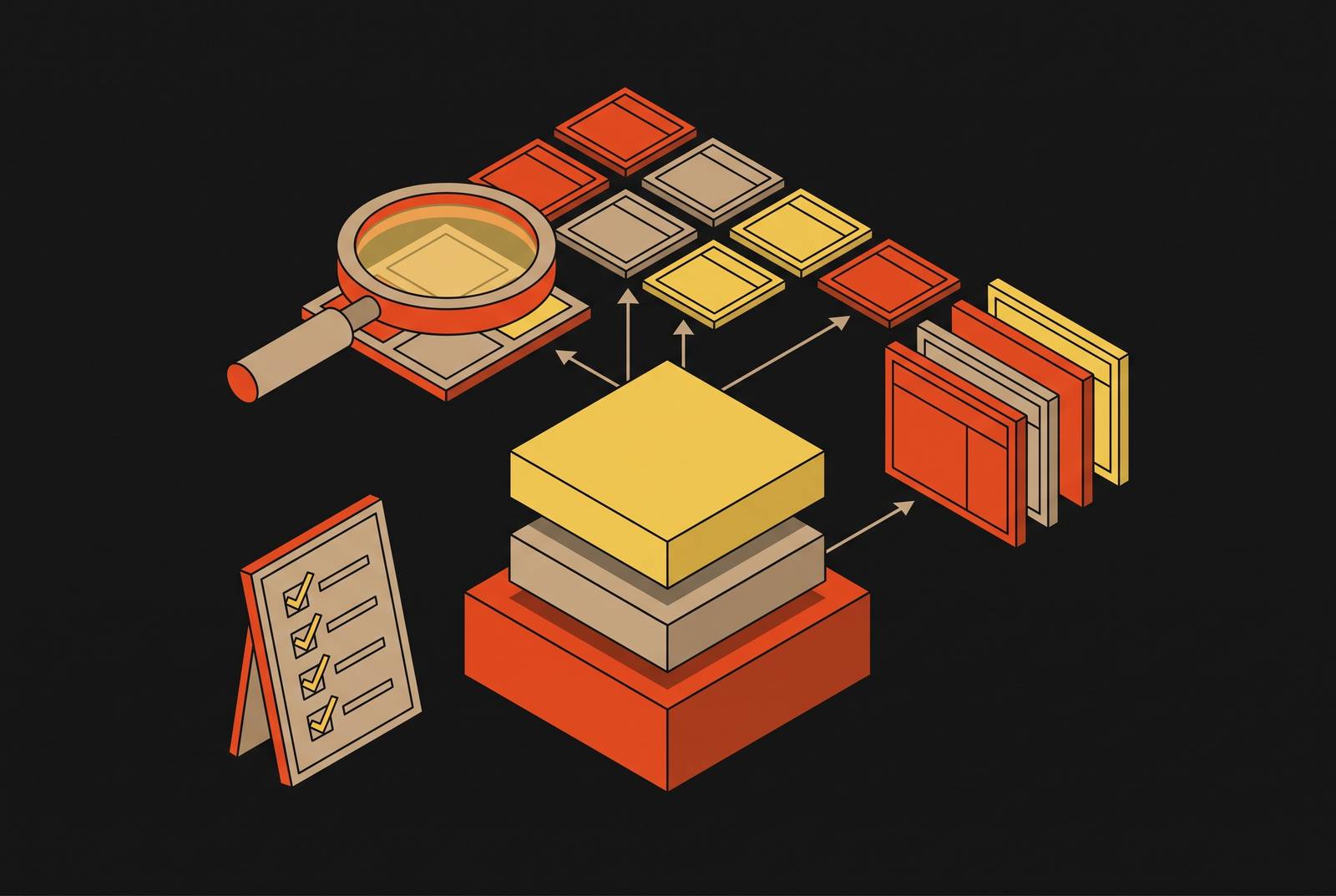
Cutting over to a materialized view requires more than checking its schema and a promising query plan. The audit must establish that the deployed view refreshes reliably, serves correct results, and covers the queries meant to use it. Those checks belong before production routing changes, because a valid-looking object can hide a stale balance, an understated total, or a query still reading the base table.
Why materialized view cutover fails in ways schema review cannot catch
A customer-facing inventory count can be wrong even when the materialized view behind it passes schema review. The columns exist, their types match, and the defining query looks sound. Yet the latest refresh may have fallen behind production writes, so the feature may report an older count. Nothing in a schema diff exposes that delay. For balances and eligibility checks, the same gap turns staleness into a correctness bug that is difficult to explain.
A query plan check addresses another part of the problem, but it cannot establish that refresh will keep working under load or that stored values match the base data. Those need separate evidence. A view may refresh successfully once, then fail at peak throughput, while a delayed processing queue can distort totals without changing the expected row count. The audit therefore has to proceed from definition to population, freshness, routing, and reconciliation before testing them together under real traffic. Each check establishes something the next one depends on.
How refresh model determines which failure modes are possible
Full refresh re-executes the defining query against the entire base table. Oracle's refresh documentation says the stored data is deleted or truncated before all the replacement data is inserted, and temporary sort space is needed to rebuild indexes. That makes data volume and available space central risks. With ON DEMAND or scheduled refresh, there is also a staleness window between updates. Snowflake's MV documentation describes a different behavior, where a query can trigger an update or combine current portions of the view with newer base-table data. An audit must check that this protection is active, since scheduled views do not all behave the same way.
Incremental refresh works on the data that has changed. Oracle identifies log-based refresh, PCT (partition change tracking), and LPCT (logical PCT), each with its own preconditions. For log-based refresh, a missing or stale materialized view log can cause failure or a silent fallback to full refresh. The chosen method determines the prerequisite to test. ON COMMIT refresh adds per-commit overhead in exchange for keeping data current, and Oracle recommends fast ON COMMIT refresh over ON DEMAND when concurrent inserts, updates, and deletes overlap refresh of views containing joins and aggregation. The audit must tell this commit cost apart from a backlog in scheduled refresh.
Confirming the view definition actually matches what is deployed
Start by comparing the live definition with the SQL in version control. Every later test depends on that match. CREATE MATERIALIZED VIEW IF NOT EXISTS can succeed when an existing view has a different defining query, without replacing it. In that case, testing the repository SQL does not validate the object production will use. Run SHOW CREATE MATERIALIZED VIEW, or the engine-equivalent introspection command. Diff the result against the repository definition, including aliases, casts, predicates, and partition expressions.
One safe pattern is DROP IF EXISTS followed by CREATE, accepting the full rebuild cost on every deployment. Another is to detect differences in CI and block deployment until a manual replacement includes an explicit rebuild. RisingWave's MV best practices recommend aligning the upstream table's ordering key with the downstream view's grouping key for backfilling efficiency, a relationship that a column-and-type review alone does not establish.
Verifying the view has completed a valid refresh and is not in a failed state
A view can exist while empty, invalid, or stuck in a refresh failure that leaves stale data available to queries. Do not rely on query errors to expose it. Check the engine's refresh state directly, including its INFORMATION_SCHEMA.MATERIALIZED_VIEWS or equivalent where available. In cloud-managed engines that have a last refresh error field, a non-NULL value shows that the last automatic refresh had an error, even if reads still return results.
PostgreSQL's pg_matviews.ispopulated answers a narrower question, namely whether the view is currently populated rather than created or last refreshed with WITH NO DATA. It records no last-refresh completion time. Freshness tracking therefore needs separate metadata, such as a timestamp written to a metadata table. Initial population needs its own check as well, since background work may not finish when creation returns. Oracle's basic MV documentation describes BUILD DEFERRED as postponing initial population until a manual refresh, so object existence alone cannot establish readiness to accelerate queries.
Establishing a freshness SLO and confirming the refresh schedule can meet it under load
Define the freshness SLO before judging the schedule. “Under N minutes behind” gives the audit a testable target, while “kept fresh” does not. Then test refresh lag at peak write throughput and check whether refresh completes within the operational update window. For incremental refresh, the critical question is whether the log accumulates changes faster than the refresh job processes them. A schedule can run exactly as configured while the view remains in perpetual catch-up.
The load test must check the resources that refresh needs. Oracle says rebuilding indexes needs temporary space and refresh itself may need more space, and index rebuilds can fail if there is too little. Its refresh guidance describes a typical daily update window of two to six hours, but the audit must test against the window available to the deployment. It also describes disabling query rewrite system-wide while stale views refresh, then re-enabling it afterward. Confirm that this procedure, where used, is documented in the cutover runbook.
Is maintaining the view worth what it saves? Snowflake identifies infrequently changing base tables as particularly suitable for materialized views, so frequent changes warrant checking whether refresh overhead consumes more credits than query reuse recovers. This belongs in the same load test as freshness validation. A view that meets its lag target only at an unacceptable maintenance cost has not passed the operational test.
Confirming the optimizer will actually route production queries through the view
Use EXPLAIN EXTENDED, or the engine's trace facility, on each production query pattern and look for the materialization identifier as the relevant leaf node in the plan. Faster execution is not enough evidence. A warmed buffer cache can produce a speedup without any rewrite occurring, leaving engineers to believe the view is serving traffic that still reaches the base table.
When rewrite does not occur, compare the query's requirements with the view's contents and semantics. A predicate may reference a column the view did not project, or the query may use different join keys or join types. Moving an outer-join predicate between ON and WHERE changes semantics and can block eligibility. Freshness can block routing too, because Oracle specifies that QUERY_REWRITE_INTEGRITY = ENFORCED or TRUSTED permits only views with updated data to participate in rewrite. A lag failure can therefore become a coverage failure.
Routing validation also has to respect the security model. Precomputed results can bypass per-user row-level security enforced at query time, and invoker-dependent expressions can return incorrect results from cached materializations. Audit those rules against the queries the view will replace. For workload-level evidence, Oracle's MV management documentation describes the SQL Access Advisor as a tool for checking view use and workload effectiveness. Running it against a shadow workload supplements the per-pattern plan checks with evidence of actual use.
Row-level reconciliation against the base table before trusting the results
Successful refresh and confirmed rewrite still leave correctness unproven. Consider a revenue view whose delayed processing queue leaves a period's total understated by a day's worth of transactions. The expected row for that period can still exist, so the row count looks right while the metric is wrong. Duplicate transactions and join fan-out create other ways for stored results to diverge from the intended computation. Counting rows is only the first check.
Compare the MV with the base table, or the defining base query's result, at the same point in time. Start with total row counts, then compare aggregate sums for the columns that matter most to the business. For revenue, compare totals by period. For inventory, compare on-hand counts by SKU. Finally, spot-check rows against the base-table computation as well as checking aggregates. This sequence tests both the shape of the result and the values customers will receive.
Oracle states that refreshing only the highest-level view can succeed while leaving underlying views stale, making the result fresh relative to an intermediate view but not the base detail tables. Map the whole refresh tree and reconcile the results at each node. Denormalized dimensions need a related integrity check before their errors propagate into refreshed results. Oracle's Data Warehousing Guide (26c) recommends DBMS_DIMENSION.VALIDATE_DIMENSION after each load and before refresh, with an incremental option for checking new rows.
Shadow-running the MV before flipping production routing
Static checks cannot reproduce every interaction under concurrent traffic. To close that gap, route a copy of production read traffic to the MV while the base query remains authoritative, compare outputs in real time, and surface divergences. Tie the test window to the freshness SLO already established. It must cover at least one full refresh cycle, ideally several, under peak load. Only promote the view when divergence reaches an acceptable threshold.
Oracle Database 23ai's automatic MV implementation provides a version of this pattern. Oracle describes creating hidden candidates, testing them against representative workload subsets, and promoting validated candidates to visible operational views. Manual cutover can use the same steps, with checks between creating the view and letting it serve production. The hidden period brings the earlier checks together. It tests whether population, lag, rewrite, and reconciliation remain sound while real query patterns and refresh work overlap.
Agentic workloads need isolation during this stage as well. High-frequency discovery probes can create write-amplification risk when run against a production MV before cutover is validated. Isolated, read-only compute over a data branch lets stress tests run without changing production state, while full query logs record what the agent read and what it got back. Recovery belongs in the runbook too. Document the MV's behavior after point-in-time restore, including the loss of incremental refresh runs after the restore point and whether a full refresh is required before routing resumes.
Schema governance practices that keep the MV audit repeatable after the first cutover
The first cutover does not end these risks. Every base-table schema change can invalidate a dependent view, and a defining-query change can undo the assumptions the audit established. Encode the checks as CI gates so that dropping or type-changing a column triggers dependency validation and blocks deployment until affected views are validated or rebuilt. Run the live-definition diff each time there is a deployment. After deployment in staging and before production routing changes, run smoke tests that check row-count and aggregate reconciliation.
Oracle treats the update window as a constrained operational resource. Migration scheduling cannot be separate from refresh scheduling. Keep migrations out of the window when refresh is already consuming temporary sort space. Otherwise, a schema change can reintroduce a resource conflict without changing the refresh schedule at all.
Naming and metadata make those controls usable over time. A name such as mv_7_v3_final does not tell engineers what the view covers, its freshness SLO, or which queries it should serve. Naming conventions, comment blocks, and a metadata registry should record coverage, refresh mode, freshness targets, dependent queries, and column meaning. Agents need these signals in a machine-readable form so they can find views without probing the base table instead. Structured schema commands that describe, validate, and confirm MV state make the audit part of ongoing infrastructure rather than a checklist preserved from the first release.